
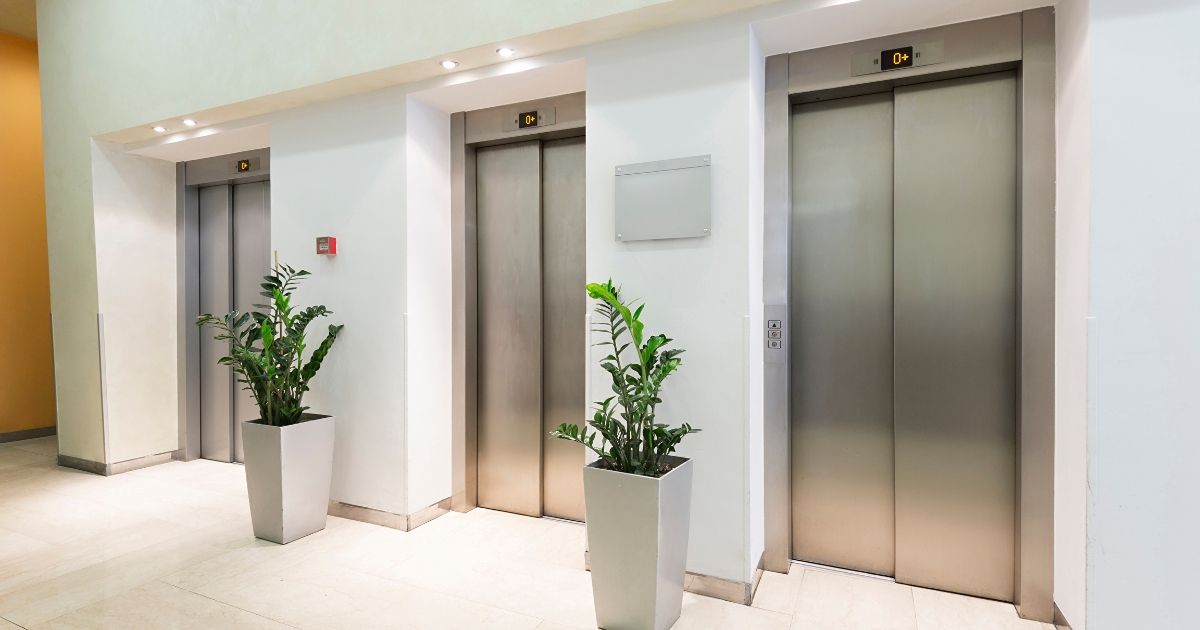
Miami elevators break down more in summer because heat, humidity, and storm season all hit the same equipment at once.
Machine rooms run hot, hydraulic oil thins out, pits fill with water, and power flickers, knocking controllers offline.
Calls for elevator repair in Miami climb through the wet season for those reasons, not because of bad luck.
Here is what fails first and what a building can do about it before July.
The Machine Room Is the First Thing to Fail
Most summer breakdowns start in a hot machine room.
Elevator controllers contain solid-state boards, drives, and relays designed for a specific temperature range, and the air inside the cabinet runs hotter than the surrounding room.
ASME A17.1 calls for machine rooms and control rooms to have their own dedicated ventilation or air conditioning systems, sized to accommodate the temperature and humidity ranges specified by the manufacturer.
Where no manufacturer range exists, code bodies commonly apply a floor of 55 degrees and a ceiling of 90 degrees Fahrenheit.
The failure most buildings never see coming is simple. The machine room air conditioner dies in June, and nobody notices, because nobody goes in there.
The elevator keeps running while the controller cooks for weeks. Then it drops out on a Saturday.
Add the machine room air conditioner to your building’s regular HVAC schedule and check it monthly throughout the summer.
It is the cheapest elevator repair in Miami you will ever avoid.
Heat and Hydraulic Oil Do Not Mix
Higher temperatures thin hydraulic oil, and thinner oil changes how the valve behaves. Riders feel it as a car that stops a half inch high or low, or as a slow start.
Most low-rise and mid-rise buildings around Miami run hydraulic equipment, so this is a widespread problem here. Leveling drift is the early warning.
Left alone through a hot summer, it turns into valve work, seal work, or pump unit repair.
Do not let a technician chase the symptom with a valve adjustment alone.
If the same car needs releveling twice in one season, the oil temperature and the seals both deserve a look.
That is where hydraulic system repairs usually should have started.
Storm Season Brings Power Problems and Water
South Florida’s wet season combines two threats in one system: electrical strikes and water intrusion.
On the electrical side, NOAA reports that lightning peaks in June, July, and August nationally, and Florida sees storm activity almost daily through those months.
A nearby strike or a utility blip need not reach your building directly. A short sag or surge can trip a drive, corrupt a controller, or take out door operator electronics.
Cars stopping between floors during afternoon storms follow this pattern. So does the run of calls the next morning, once buildings find out which cars did not come back on their own.
On the water side, pits flood. A high water table, heavy rain, and a failed sump pump put standing water under the car, which rusts buffers, pit channels, and travel cable ends. Water in a pit will also fail an inspection.
Check your sump pump before the season starts, not during it.
Miami-Dade’s Office of Elevator Safety publishes guidance on elevator safety before, during, and after a hurricane, and buildings should read it in May.
Summer Traffic Adds Runs the Equipment Feels
Usage rises in summer too, and door equipment takes the hit. Doors open and close on every stop, so door operators, gibs, rollers, and detector edges wear faster than anything else in the system.
Buildings with pools, roof decks, and summer guests run more short trips between floors. Short trips mean more door cycles per hour of use, not fewer.
That is why the same door fault repeats all August in a building whose winter record looks clean.
Our post on the reasons elevators break down covers the mechanical side in depth. The seasonal part is volume.
What Prevents Most Summer Elevator Repair in Miami
Four moves cover most of it, and all four happen before June.
- Service the machine room air conditioner and set a monthly temperature check.
- Test the sump pump and clear the pit.
- Ask for door equipment adjustment as part of spring preventive maintenance visits, not as a callback in August.
- Confirm that your surge protection and your emergency power transfer both work.
Here is the limit. None of this fixes equipment at the end of its life.
A controller from the 1980s in a hot machine room will fail in July no matter how good the schedule is, and at that point modernization options beat another repair ticket.
Buildings that track recurring faults over a season often find that monitoring reduces downtime more quickly than adding visits.
When a car does stop with a passenger inside during a storm, that is not a maintenance question.
That is a call for emergency elevator repairs, and the fire department if anyone is in distress.
Get Your Building Ready Before the Next Heat Wave
Put a thermometer on the wall in the machine room and test the sump pump this week.
Those two checks catch much of what fails here between June and September.
Write down the temperature on the same day each month so you have a record rather than a guess.
A number that climbs from May to July means the air conditioner is losing ground before the controller does.
Then compare this season’s callback log against last summer. The same fault every August is a pattern, not bad luck.