
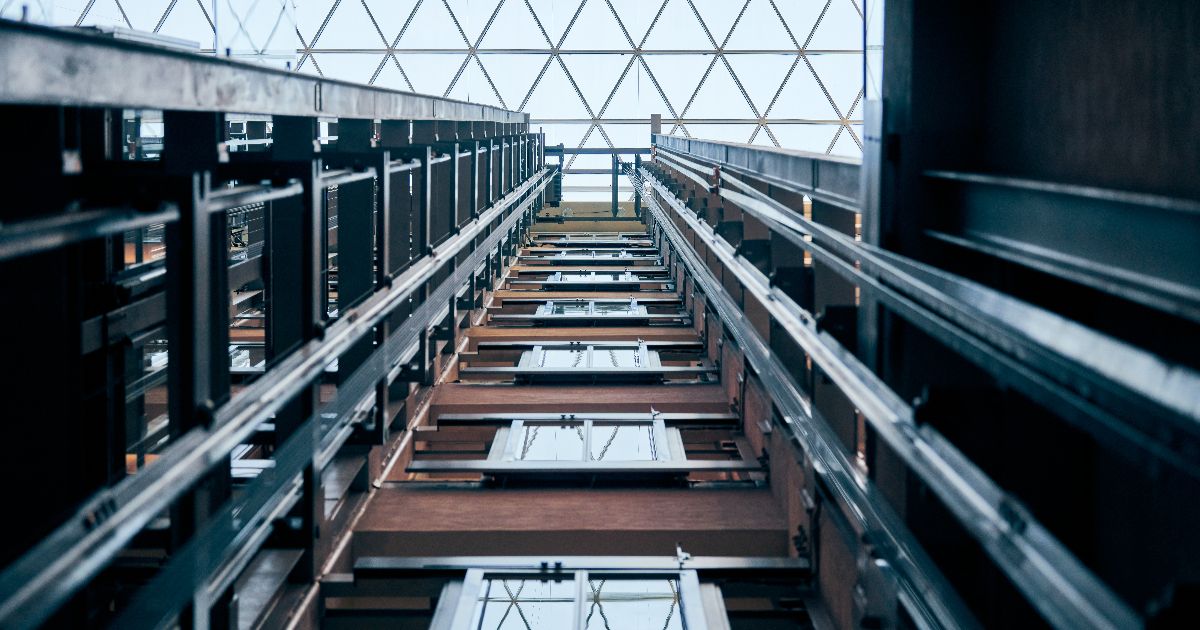
A hoistway is the vertical shaft through which an elevator travels.
It guides the elevator cab, protects moving parts, and keeps people safe while the elevator moves between floors.
What a Hoistway Does in an Elevator System
A hoistway is the enclosed vertical space that runs from the lowest level to the highest level served by the elevator.
The elevator cab moves up and down inside this space.
The hoistway also holds rails, cables, wiring, and safety equipment. Without a hoistway, an elevator cannot work safely.
This space keeps all elevator movement controlled and separated from people outside the cab.
Location
The hoistway is usually built within a building’s structure. In many buildings, it runs through every floor.
You can find a hoistway:
- In the center of a building
- Along an exterior wall
- Inside a dedicated shaft space
The hoistway may be built during construction or added later in homes. In commercial buildings, it is planned as part of the main structure.
What Is Inside a Hoistway?
A hoistway is not an empty space. It contains many important parts that help the elevator move and stop safely.
Inside a hoistway, you will usually find:
- Guide rails that keep the cab straight
- Cables or belts that lift the cab
- Electrical wiring
- Safety brakes
- Door systems on each floor
All these parts work together to control speed, direction, and stopping points.
Hoistway Keep Elevators Safe
Safety is one of the main reasons a hoistway exists. It creates a controlled path for the elevator and blocks access to moving parts.
The hoistway:
- Prevents people from touching moving equipment
- Supports emergency braking systems
- Keeps the cab aligned during travel
Hoistway doors on each floor stay locked unless the cab is present. This reduces the risk of falls or injuries.
Hoistway vs. Elevator Shaft: Is There a Difference?
Many people use the terms “hoistway” and “elevator shaft” to mean the same thing. In most cases, they do.
The word “hoistway” is the technical term used in building plans, safety codes, and inspections. “Elevator shaft” is the more casual term used in everyday conversation.
Both refer to the vertical space that holds the elevator system.
Size and Design
Hoistway size depends on the type of elevator and the number of floors it serves. Residential elevators usually need smaller hoistways than commercial ones.
Design factors include:
- Elevator cab size
- Weight limits
- Speed of travel
- Number of stops
Building codes set minimum size and clearance rules. These rules help ensure safe operation and proper airflow.
Residential vs. Commercial
Residential hoistways are built for lighter use. They are smaller and serve fewer people.
Commercial hoistways are larger and designed for frequent use. They must support heavier loads and higher speeds.
Key differences include:
- Size and depth
- Fire safety requirements
- Inspection frequency
Both types must meet safety codes, but commercial systems follow stricter rules.
Fire Safety
Fire safety is a major concern with hoistways. Because hoistways pass through multiple floors, they can spread smoke or heat if not protected.
To reduce risk, hoistways often include:
- Fire-rated walls
- Smoke control systems
- Fire-resistant doors
These features help slow fire spread and protect escape routes.
Construction Basics
Building a hoistway requires careful planning. Contractors must follow specific guidelines during construction.
Common materials include:
- Concrete
- Steel framing
- Fire-rated drywall
The walls must stay straight and strong. Even small alignment issues can affect elevator performance.
Hoistway Inspections
Hoistways are inspected as part of regular elevator safety checks. Inspectors look for damage, debris, or alignment problems.
Inspectors check:
- Wall condition
- Guide rail alignment
- Door operation
- Cleanliness and clearance
A damaged or dirty hoistway can cause elevator problems or safety risks.
Common Hoistway Problems
Hoistways can develop issues over time. These problems often affect elevator performance.
Common problems include:
- Water leaks
- Debris buildup
- Wall damage
- Misaligned rails
Routine maintenance helps catch these issues early and avoid costly repairs.
How Hoistways Support Safe Elevator Travel
A hoistway is the backbone of an elevator system.
It guides movement, protects key parts, and keeps people safe as elevators travel between floors.
When a hoistway is built and maintained correctly, elevators run smoothly and reliably.
Understanding its role helps explain why proper design, inspections, and repairs are necessary for safe elevator operation.