
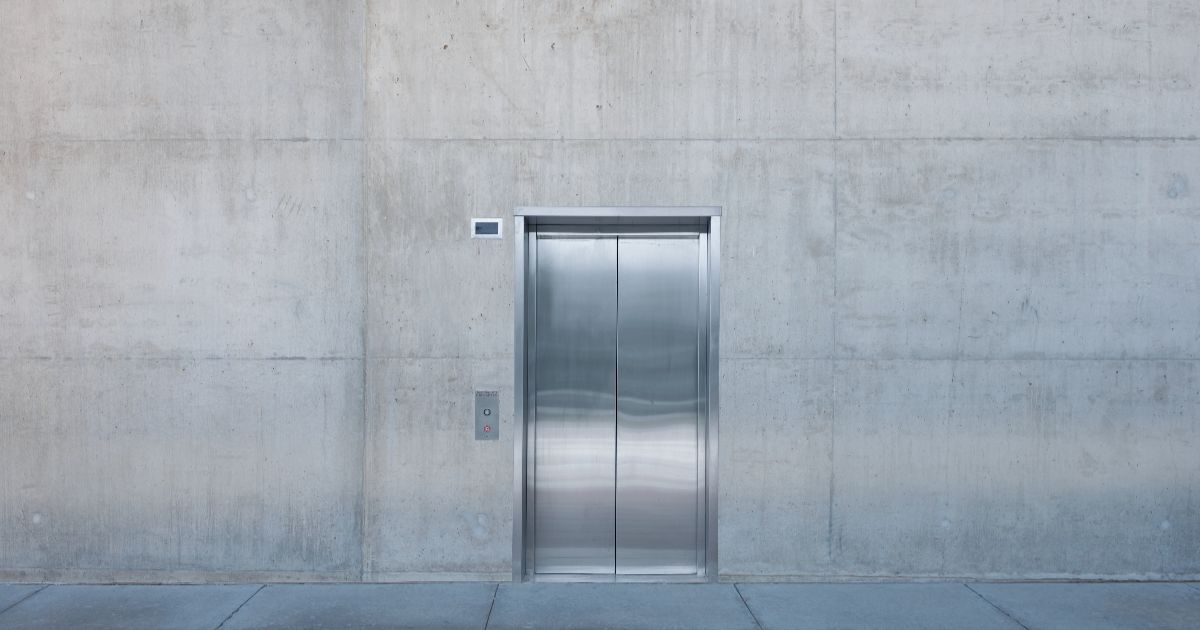
A half-built elevator uses part of the building structure for support while the other side uses its own frame.
A wall-attached elevator connects directly to a building wall and uses that wall as its main support.
The main difference between a half-built elevator vs wall-attached elevator is how the elevator structure connects to the building.
One shares part of the building frame, while the other mounts to a wall and requires less structural work.
What Is a Half-Built Elevator?
A half-built elevator sits partly inside a building structure. The elevator shares part of the building wall but also uses its own frame.
This type of elevator is common in buildings where space allows part of the shaft to be built into the structure.
A half-built elevator often includes:
- One wall built into the building structure
- One or two sides built with metal framing
- A shaft that extends through floors
- Doors aligned with hallway openings
Builders often choose this setup when the building design already includes space for an elevator shaft.
What Is a Wall-Attached Elevator?
A wall-attached elevator is mounted to the wall rather than built inside the structure.
These are common in renovations or buildings that did not include an elevator during the original construction.
A wall-attached elevator usually includes:
- A support rail fixed to a building wall
- A smaller shaft or enclosure
- A compact elevator car
- Minimal structural changes
A lot of residential elevators and small commercial lifts use this system.
Installation Differences
A half-built elevator is installed during the building construction phase.
Builders plan the elevator shaft while the structure is under construction.
This process includes:
- Creating the shaft space
- Installing support beams
- Building elevator walls
- Installing guide rails and equipment
A wall-attached elevator is installed after the building exists.
Technicians attach rails and support equipment to the wall.
This process often includes:
- Anchoring rails to the wall
- Installing the elevator motor system
- Adding a compact enclosure
- Connecting electrical systems
Wall-attached elevators usually take less time to install because the building already exists.
Space Requirements
A half-built elevator requires more space because part of the shaft sits inside the building structure.
This type often needs:
- A full vertical shaft
- Floor openings for the elevator path
- Structural planning during construction
A wall-attached elevator requires less space.
The system mounts to an existing wall and often uses a narrow enclosure.
This option works well for:
- Small buildings
- Homes
- Retrofit projects
- Buildings with limited space
When space is tight, wall-attached systems often become the easier choice.
Where Each Elevator Type Is Common
A half-built elevator is common in:
- Office buildings
- Hotels
- Hospitals
- New apartment buildings
- Large commercial spaces
A wall-attached elevator is common in:
- Houses
- Small offices
- Shops
- Older buildings without elevators
- Retrofit projects
Maintenance and Access
A half-built elevator usually includes a full machine system inside the building structure. Technicians access the shaft and mechanical components through service areas.
These elevators often include:
- Larger machine systems
- Full guide rail systems
- Larger elevator cars
A wall-attached elevator usually has compact equipment.
Technicians access the system through service panels or the enclosure area.
These elevators often include:
- Smaller motors
- Compact rails
- Lightweight elevator cars
Both systems require regular inspections to maintain good condition.
Which Elevator Option Is Better?
Choose a half-built elevator if:
- The building is under construction
- There is space for a shaft
- The project requires a larger elevator
Choose a wall-attached elevator if:
- The building already exists
- Space is limited
- The project is a retrofit
Both options provide reliable vertical transportation.
Choosing the Right Elevator System for Your Building
The difference between a half-built elevator vs wall-attached elevator comes down to structure, space, and installation timing.
Half-built elevators form part of the building structure. Builders include them during construction and design the shaft into the building.
Wall-attached elevators connect to an existing wall and require less structural work. This makes them a strong choice for homes and retrofit projects.
Understanding these differences helps building owners choose the elevator system that fits their space, structure, and long-term needs.